

Here is how to make a Day of the Dead ofrenda!
Are you wanting to know how to make a Day of the Dead ofrenda? An ofrenda (offering) is an altar filled with items dedicated to a loved one who has passed on. It’s an essential component of any Dia de los Muertos celebration. Built to honor specific family members, they can be large and elaborate or small and personal. Ofrendas are one of the most important and meaningful symbols of the holiday.
I’ve seen friends plan their ofrenda design for weeks! But I also have friends who build them in minutes. Some take up an entire room, others are a simple painted matchbox. The spirit is to let your heart be your guide. Think about the reason you’re making the ofrenda – the person or the message. Tell a story the shows the personality of the person who you are making it for.
Families often spend weeks creating these altars, and sometimes even hire professionals! Because it is believed that the souls of their family members return on this holiday, those celebrating want to make sure they are delighted after their long and difficult journey!
History of the Ofrenda
Creating home ofrendas dates back to the Aztec times. People included offerings representing all elements: Wind, earth, fire, and water, to honor the dead and encourage their return.2 Since then, they have evolved to the multi-tired, colorful collection we see today.

Essential Offerings for the Ofrenda
Ofrendas are used to honor the dead, so they are a wonderful opportunity for strangers to learn a little bit about them. When creating an ofrenda, those celebrating always have a specific loved one in mind. There is lots of thought that goes into creating the perfect ofrenda.
Many of them contain multiple extravagant tiers. This is done to please their deceased loved ones and to make them happy for returning. For the most part, the ofrenda tiers follow a similar pattern:
The Bottom Tier is the most practical. This is filled with candles, to light the way, and water so that the dead can refresh themselves. This tier might also include a basin for washing, and a mirror so that the dead might see themselves upon returning. For the candles, you can decorate them with pictures and embellishments.
The Second Tier is used for foods and favorite items. This tier is for helping the dead feel more at home and welcoming them after their long journey. Tamales and mole, sugarcane, fruit, and liquor are all included on this tier. I make an ofrtenda for my dad every year. I always include a cup of coffee, a pack of cigarettes and some of the watches he built.
The Top Tier is used to identify the person for whom the ofrenda was created. Photos of the person when they were alive sit on the top tier along with images of various saints and other religious items. I like to make elaborate picture frames for this part!

The four elements
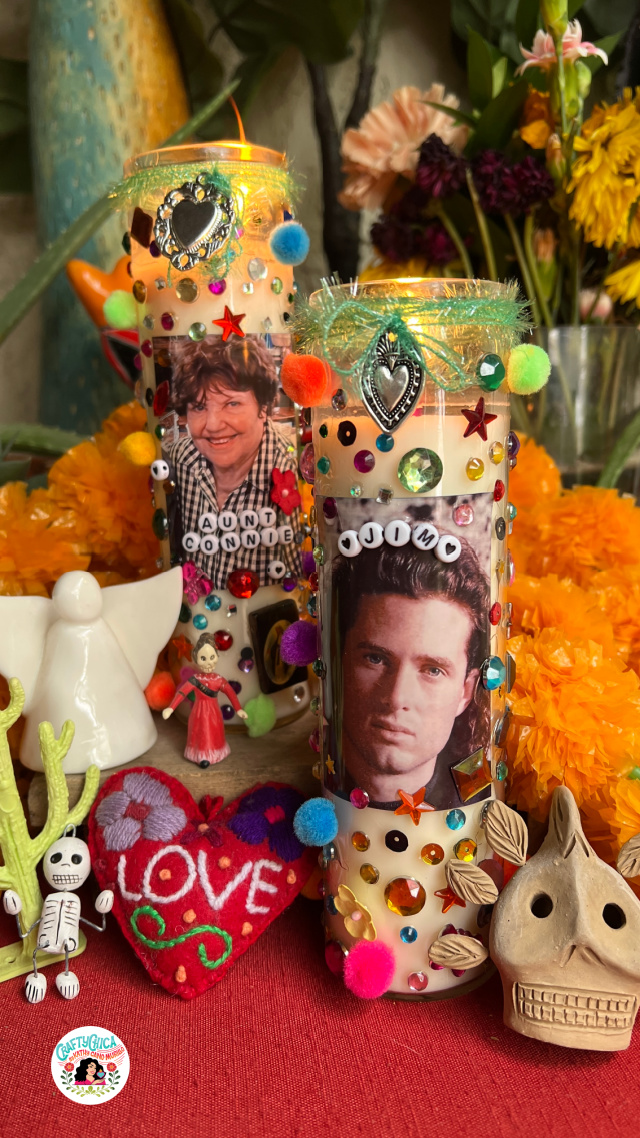
Your ofrenda should have representation of the four elements of life:
Earth – food, bread – even flowers, anything from the earth.
Water – a glass or pitcher of water so the souls can quench their thirst.
Fire – the candles or the copal.
Air – Papel picado (this can also be copal or incense), the movement from the air represents wind.
Photographs
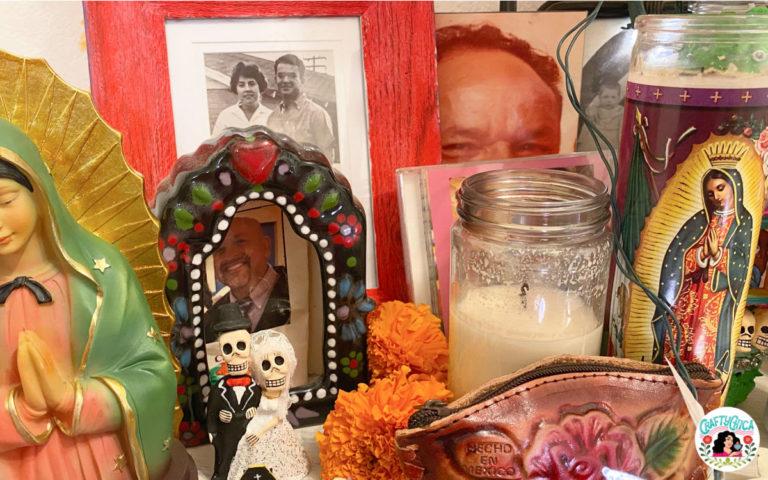
Photographs of the deceased loved have become a prominent component of the ofrenda. They identify the person for whom it was created, and encourage their return. Lots of pictures really brings it to life!
However, it is not necessary, you can also use items representing the person.
Bread and Other Foods

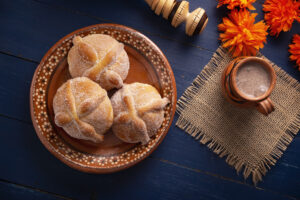
Food placed at the ofrenda varies significantly, depending on the person it was created for. The deceased’s favorites most commonly sit at the altar, along with foods associated with Day of the Dead, like pan de Muerto, sugar skulls, and pan dulce.
Religious Statues and Symbols:
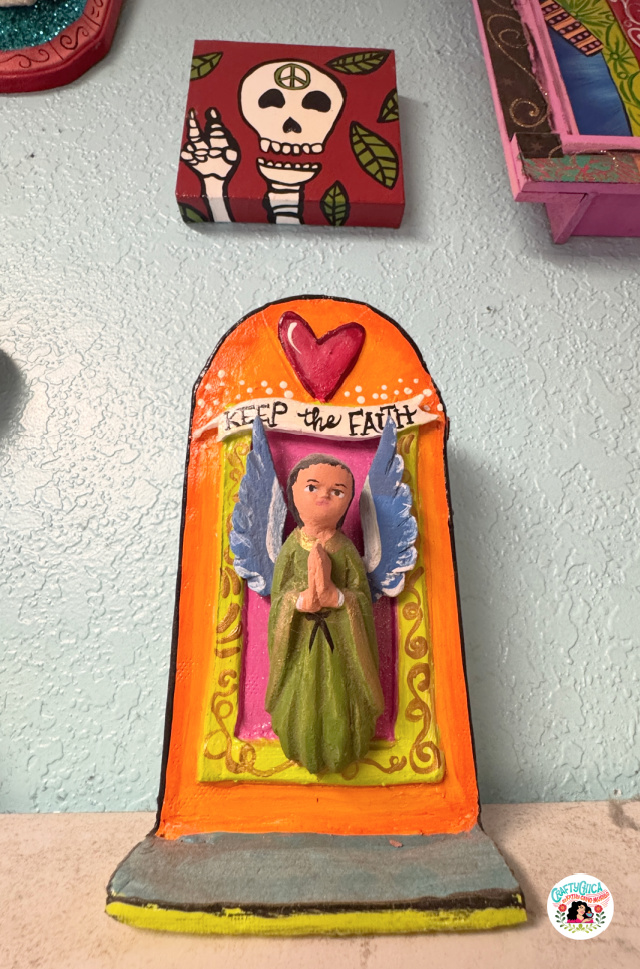
Catholic and religious symbols are commonly used throughout Day of the Dead and placed at the ofrendas. The cross, photos of saints, and angels are routinely included in ofrendas.
Toys and Alcohol:
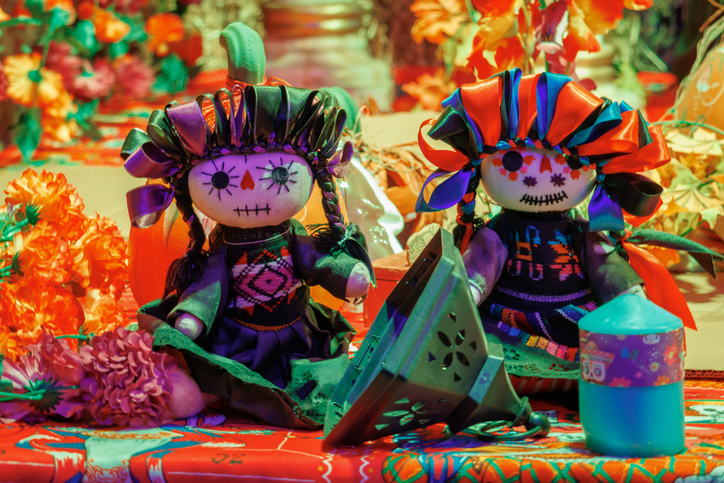
Depending on the person who died, and their age, certain objects are included in the ofrenda to help the dead feel more at home. Favorite toys are offered for children who have passed away, and alcohol and cigarettes are for adults who enjoyed them while still alive.
Marigold flowers:

Flowers, most notably marigolds, are another essential element in the ofrenda. It is believed that the floral scent is especially enticing to the dead, and marigolds are used to represent the fragility of life. The vibrant color is also believed to attract the spirits to the ofrendas.
RELATED:
The Meaning of Marigolds for Dia de Los Muertos + Free Printable
How to make tissue paper marigolds
Easy DIY: Dia de Los Muertos marigold flower crown
Mariposas (butterflies)
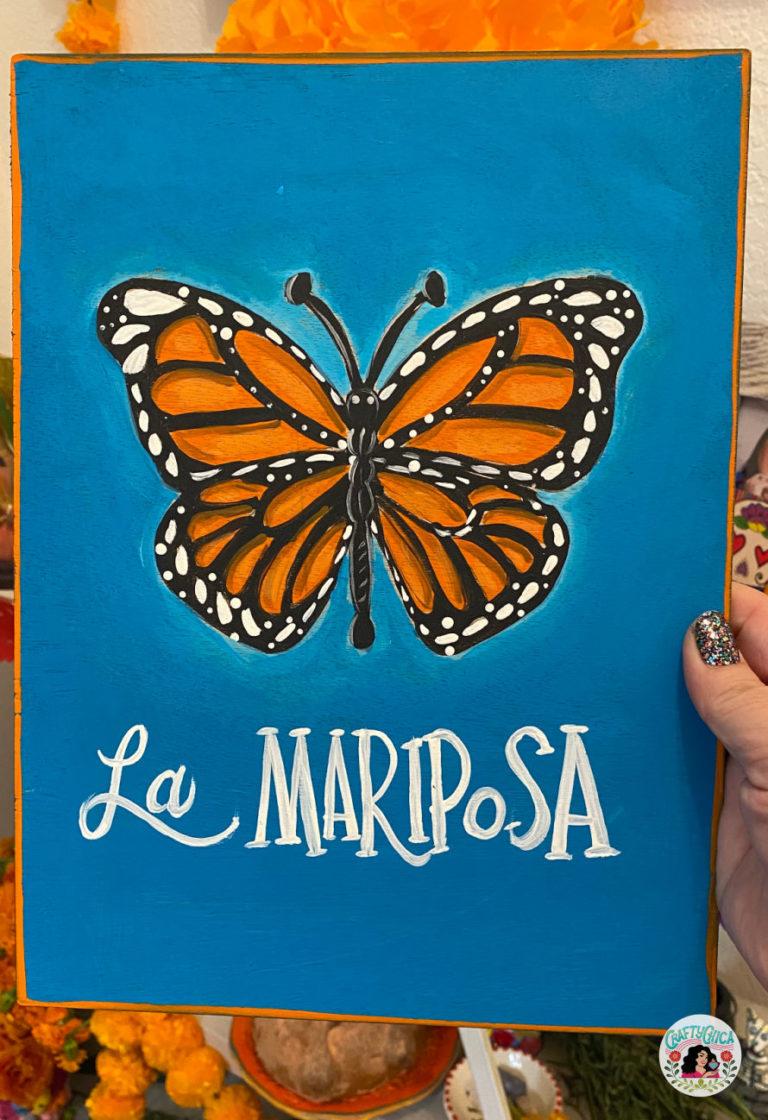
In indigenous traditions, monarchs carry the returning spirits of ancestors visiting the living world. The orange wings symbolizes the souls visiting family. Today, las mariposas remain an essential part of Dia de los Muertos, they represent our elders and ancestors who passed on. All our loved ones!
These days, millions of monarch butterflies complete a remarkable 3,000-mile journey every fall season. They arrive in Michoacán and go towards the oyamel fir forests at the start of November. Their arrival aligns perfectly with Día de los Muertos (Day of the Dead)!
Water
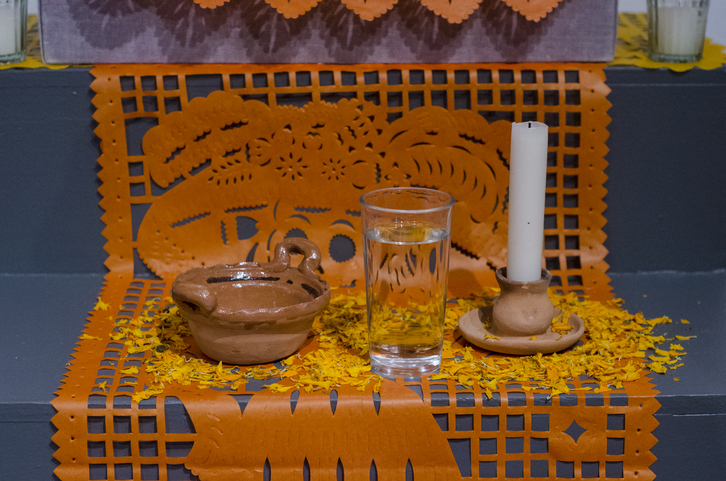
Water is one of the most common elements included in almost every ofrenda. It quenches the thirst of the spirits and refreshes the dead after their long journey back home!
It holds a fundamental place, serving both physical and spiritual purposes. After their long journey back from the spirit realm, returning souls are believed to be weary and thirsty. A simple glass of pure water offers refreshment and renewal.
Thank you for reading this article, I hope it helps you learn how to make a Day of the Dead ofrenda!


Thank you for sharing your expertise and guidance on ofrendas. What is the next step? What do we do and say? How do we offer the items and is there a prayer or something? Thanks!